
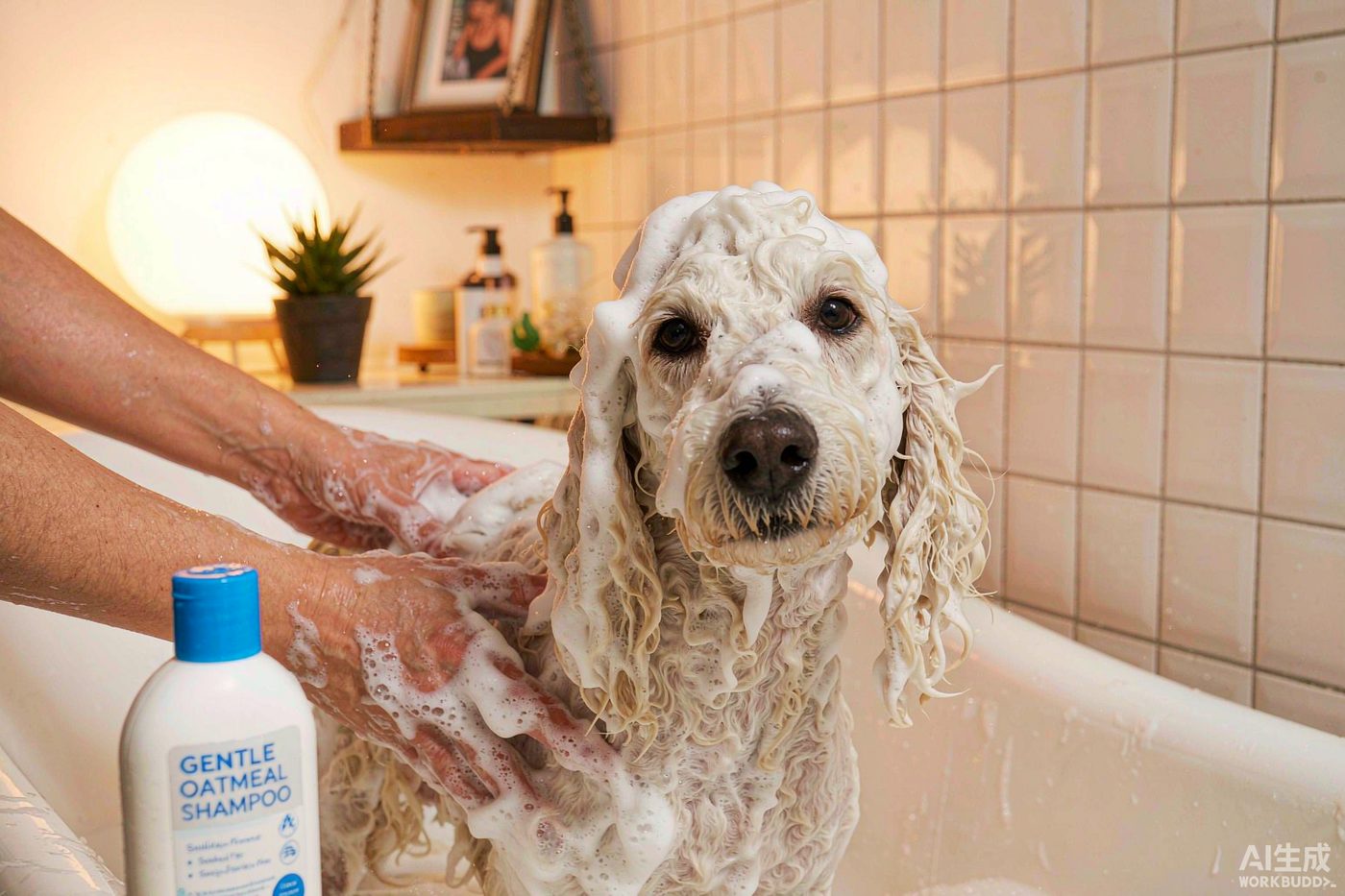
If your dog ends every bath scratching, or itches in the days between baths, the shampoo is a reasonable suspect — but not the only one. Here’s how to read a sensitive-skin shampoo label like a pro, and the honest limits of what a shampoo can fix.
First, the disclaimer that matters
Persistent itching has many causes: flea allergy dermatitis, environmental allergies, food sensitivities, infections (yeast, bacteria), and hypothyroidism among them. A shampoo soothes symptoms; it doesn’t treat any of those. If your dog scratches enough to break skin, smells yeasty, or loses fur patches, that’s a vet visit — not a shopping trip.
Reading the label: ingredients that help
- Colloidal oatmeal — the classic soother for dry, itchy skin; well-tolerated and genuinely effective as a moisturizing anti-itch ingredient.
- Aloe vera — cooling and gentle on irritated skin.
- Omega fatty acids and ceramides — support the skin barrier rather than just masking itch.
- Hypoallergenic / fragrance-free — “fragrance” is where most reactions come from. For sensitive dogs, no fragrance beats masking fragrances.
- pH-balanced for dogs — dog skin pH differs from human skin; human shampoo genuinely shouldn’t be used, even the gentle stuff.
- Medicated actives (chlorhexidine, ketoconazole) — these are for specific conditions a vet diagnoses. Don’t self-prescribe medicated shampoos for plain dryness.
Ingredients to avoid for sensitive dogs
- Fragrance/parfum high on the ingredient list (most common trigger)
- Dyes and colorants — zero benefit, possible irritant
- Sulfates (SLS/SLES) as primary surfactants — strip natural oils; look for gentler cleansers
- “Tearless puppy” marketing with no ingredient transparency — the list is the product
How often are you bathing? (The hidden variable)
Over-bathing dries skin more reliably than any bad shampoo. The general rhythm:
| Situation | Bath frequency |
|---|---|
| Healthy skin, short coat | Every 1–2 months |
| Dry/itchy skin | Monthly at most, moisturizing shampoo |
| Medicated protocol | As prescribed |
| Muddy trail dog | Rinse with plain water; save shampoo for real dirt |
Dog Shampoo for Sensitive Skin (fragrance-free, oat or aloe)
Look for colloidal oatmeal or aloe, no fragrance, no dyes, and pH-balanced for canine skin.
Technique matters almost as much as the bottle
- Lukewarm water only — hot water strips oils and worsens itch.
- Two washes when it counts: first wash loosens dirt, second actually cleans. For sensitive skin, often one gentle wash is plenty.
- Rinse until you think you’re overdoing it, then rinse more. Residual shampoo left on skin is a classic hidden itch cause.
- Dry thoroughly — damp coat in skin folds breeds yeast. Towel + low-heat blow-dry for thick coats.
- Follow with brushing (see our deshedding guide) to distribute natural oils post-bath.
FAQ
Can I use baby shampoo on my dog?
Once in an emergency, probably fine. Routinely, no — pH mismatch. Dog-formulated fragrance-free shampoos cost little more and are built for canine skin.
My dog itches more after baths with a "gentle" shampoo.
Two usual suspects: fragrance (even "unscented" products can have masking fragrance) or incomplete rinsing. Switch to a fragrance-free formula and double your rinse time.
Do oatmeal shampoos help allergies?
They soothe the itch symptomatically. Environmental allergies usually need a vet-directed plan (immunotherapy, antihistamines, or newer options) — shampoo is comfort care, not treatment.
Short version: fragrance-free, oat or aloe, dog-pH, rinse forever. And if the itch doesn’t yield to good shampoo habits in a few weeks, the next stop is the vet — not another bottle.