
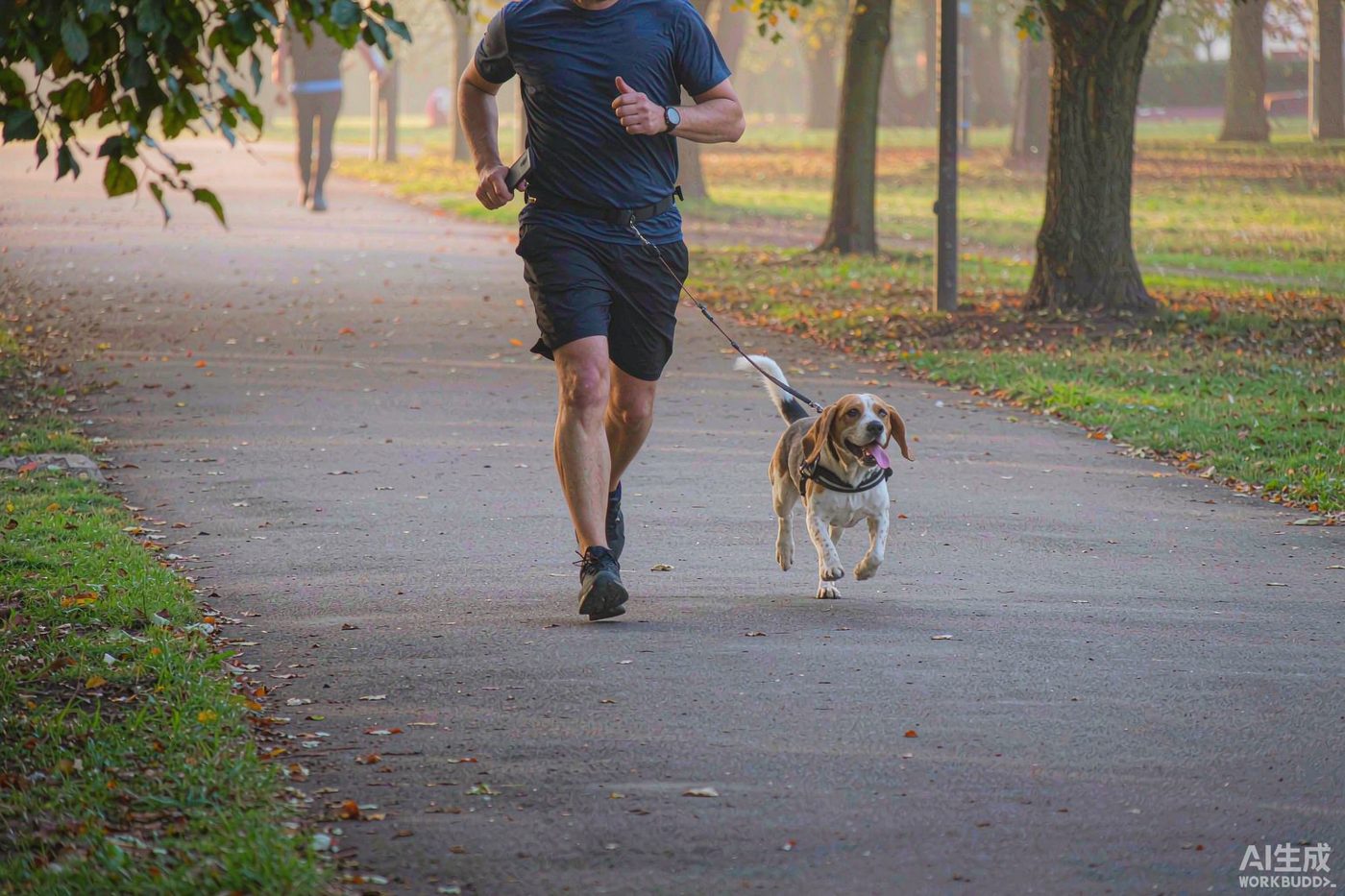
Running with your dog changes the math of a leash. The moment both hands matter — for balance, for your watch, for catching yourself on gravel — a standard leash becomes a hazard. Hands-free leashes move the anchor point to your waist or hips, and after looking closely at how the category works (and where owners consistently report problems), here’s what actually matters.
The anatomy of a good hands-free leash
1. The belt. Wide (5 cm / 2 in or more), padded, and adjustable enough to sit on your hips, not your waist — a belt that rides up can compress breathing at a hard pace. The strongest designs use a proper climbing-style buckle, not friction clips.
2. The bungee section. This is the heart of the system. An elasticized segment absorbs the shock of a dog who surges, stops to sniff, or bolts at a squirrel. Without it, every change of pace yanks your lower back; with too much of it, you lose all feel for where the dog is. A 30–50 cm bungee section is the practical sweet spot.
3. The attachment hardware. A swivel snap hook at the collar end prevents the leash from winding up as the dog moves from side to side. At the belt end, a rotating D-ring does the same for your waist. Check the stated breaking strength — a mid-size dog at full sprint can generate hundreds of newtons of peak force.
4. The traffic handle. A secondary grab handle near the collar end. Sounds optional; isn’t. It’s how you control your dog in the last three meters before a road, another dog, or anything else that appears suddenly.
5. Pockets. Some belts include a zip pouch for phone, keys, and poop bags. Genuinely useful — see our poop bag holder guide for why bag logistics matter.
What owner feedback says about the category
Recurring themes across thousands of reviews:
- Cheap belts slip. Repeated complaint: budget belts rotate around the waist as the dog pulls laterally. Look for a non-slip inner lining or wear the belt snug on the hips.
- Bungee that’s too long turns a run into a comedy of slack — total leash length around 1.5 m suits most running routes; 2+ m is for hiking, not pace work.
- Reflective stitching fades fast on cheap models; a bright solid color remains visible after reflective elements wear out.
- The single biggest divider: dog size. The same leash that’s perfect for a 20 kg beagle mix can feel like towing a sled with a 40 kg lab. Match the stated weight rating honestly.
Match the leash to the run
| Scenario | What to prioritize |
|---|---|
| Steady-pace road running | Moderate bungee, 1.5 m length, reflective everything |
| Trail running | Stronger bungee, swivel hardware, quick-release buckle on belt |
| Big, strong dog | High breaking strength, wide belt, traffic handle is mandatory |
| Small dog | Light clip hardware (heavy snap hooks drag small collars sideways) |
| Hiking (not running) | Longer line, convertibility to hand-held is a bonus |
Hands-Free Running Leash (waist belt + bungee)
Priorities: wide padded belt, 30–50 cm bungee section, swivel snap hook, traffic handle.
The honest downsides
Why runners convert
- Both hands free for balance and phones
- Bungee protects the lower back from surges
- Consistent position — most dogs settle into "at heel" faster
- Many convert to standard leashes for walks
Real trade-offs
- If the dog bolts hard, the force hits your hips — not for people with back problems
- Tangling risk with multiple dogs; realistically one dog per person
- Learning curve: expect a few awkward first runs
FAQ
Is it safe to run with the leash attached to a collar?
For pulling-prone or young dogs, a harness is safer — sudden bungee force on a neck can cause injury. See our harness guide for running-compatible options.
How do I stop the belt from rotating?
Wear it lower and snugger on the hips, and prefer belts with a non-slip backing. Some runners add a second stabilizing strap that loops around the thigh.
Can I use it with a puppy?
Wait until the dog's growth plates are closing and they can hold a loose-leash trot — generally after structured conditioning. Ask your vet about your breed's timeline.
We haven’t brand-tested every model on the market, and we won’t pretend otherwise — but the specification checklist above is what separates the leashes that survive a season from the ones that don’t. Run safe 🏃♂️🐕