
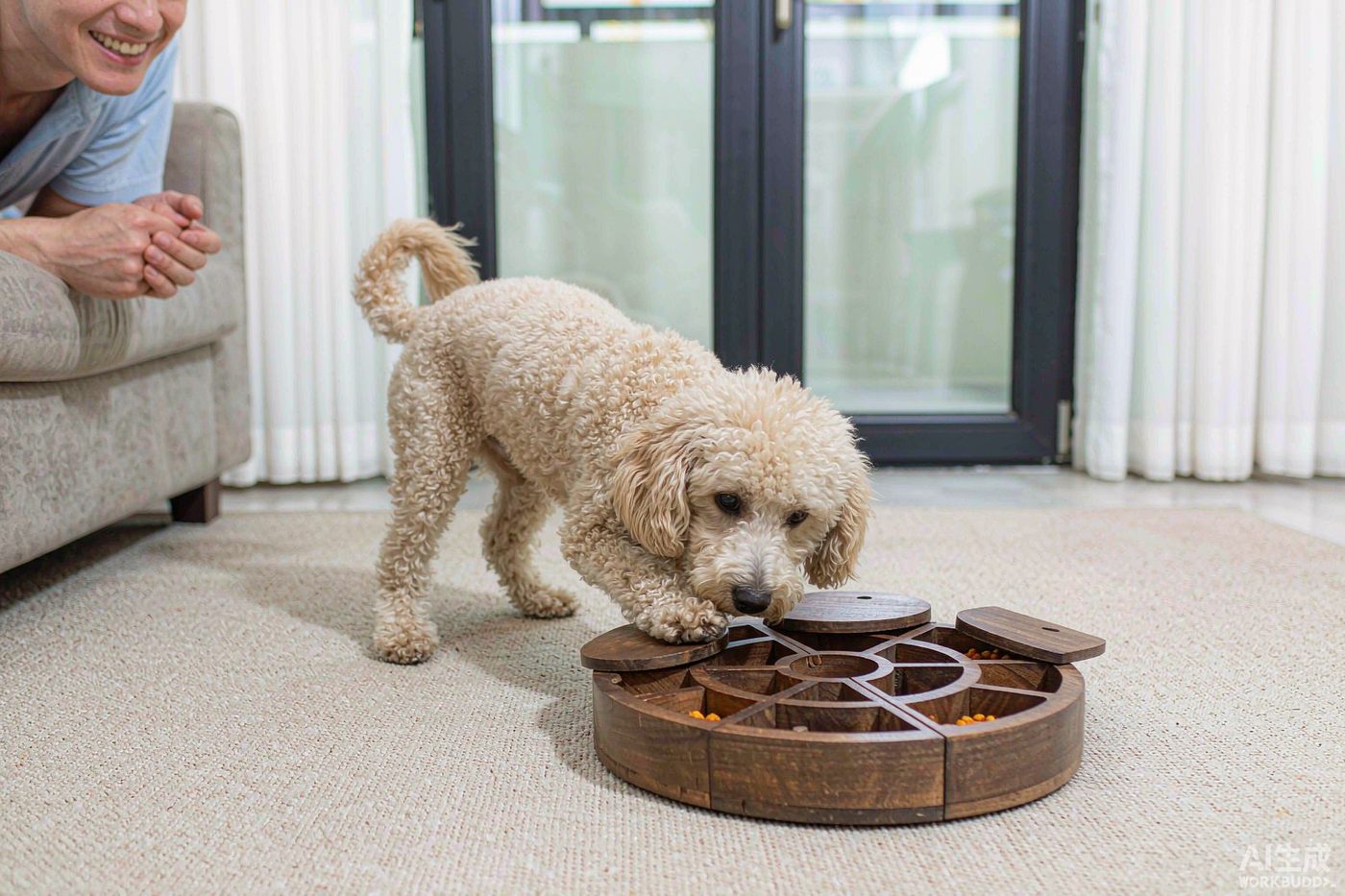
The classic mistake with puzzle toys: buying the impressive-looking level-3 puzzle with sliding panels and drawers, watching your dog give it two confused sniffs, and deciding “my dog hates puzzles.” Almost no dog hates puzzles — almost every dog has been handed a frustration machine instead of a solvable problem. Here’s how to start right.
The level system, decoded
Most quality puzzle brands label difficulty 1–4. Translate the labels like this:
- Level 1 — reveal problems. The dog moves, tips, or noses something and food falls out. Snuffle mats, rolling treat balls, and single-flip lids live here. The dog learns the core lesson: effort creates food.
- Level 2 — one-step mechanisms. Slide a panel, lift a cup, spin one module. Each compartment is solved by a single, discoverable action.
- Level 3 — combinations. Solve step one to unlock step two — slide the blocker before the drawer opens. Requires memory and sequencing.
- Level 4 — multi-step planning. For puzzle veterans only; genuinely hard.
The rule: your dog should succeed at the current level within a minute or two, most of the time. Ten minutes of productive failure teaches persistence; ten minutes of total confusion teaches that puzzles are stupid. Watch the dog, not the packaging.
Buying your first puzzle
For a first purchase, the spec that matters:
- Start at level 1–2 regardless of how smart your dog is. Smart dogs simply level up faster; skipping levels teaches frustration, not genius.
- Non-slip base — a puzzle that slides away when nudged is unsolvable physics.
- Washable plastic or wipe-clean surfaces. Food-contact toys need real cleaning.
- Sturdy enough to resist pawing — check reviews for cracked sliders; determined paws are strong.
- No removable parts small enough to swallow. Real rule, not fine print.
Beginner Dog Puzzle Toy (slide or flip, level 1–2)
One mechanism, non-slip base, washable — the right first puzzle for nearly every dog.
Teaching the game (five minutes, three rules)
- Show, then hide. First round: treats in open compartments. Dog eats, learns the machine. Second round: one compartment covered. Dog discovers nudging works. Build from there — the sequence matters more than the toy.
- Cue and celebrate. Say “find it” when you set the puzzle down, praise wins, and end the session while the dog is winning — two or three successes, then pick it up.
- Never let it become a chew toy. The moment the dog stops problem-solving and starts chewing the frame, the session is over and the puzzle goes away. This single habit is what makes puzzles last years instead of days (same principle as our rubber chew toy rules).
Signs you’re ready to level up
- The dog solves the current puzzle in under 30 seconds, every time, without visible effort.
- The dog brings you the puzzle unprompted (the dog is asking for harder work).
- You’ve stopped needing to show anything — new configurations are solved cold.
Then buy level 3. If your dog hits a wall at the new level, drop back for a session, then retry. Confidence is the currency; spend it carefully.
Why bother at all?
Puzzle work is the indoor equivalent of a sniff-walk: it exercises the seeking system, produces calm tiredness, and builds problem-solving confidence that spills into the rest of training. For rainy days, post-surgery rest, or the half hour before visitors arrive, it’s the most useful tool in the drawer — and it stacks with treat dispensers as your dog’s daily enrichment routine.
FAQ
My dog just flips the whole puzzle over. Cheating?
It's problem-solving, technically — gravity works. Anti-tip puzzles with heavier bases exist, and many dogs grow out of flipping once the mechanisms are understood. A rubber mat under the puzzle helps too.
How many puzzles should I own?
Two or three at different levels beats ten at one level. Rotation keeps each puzzle interesting — bring one out, put another away.
Are puzzles safe to leave out?
No — puzzle toys are supervised equipment by design (small parts, frustration chewing). Out during sessions, in the cupboard between.
Start easy, end early, level up on evidence. Six weeks from now, “find it” plus a level-2 puzzle will be the most reliable twenty minutes of quiet in your house.