
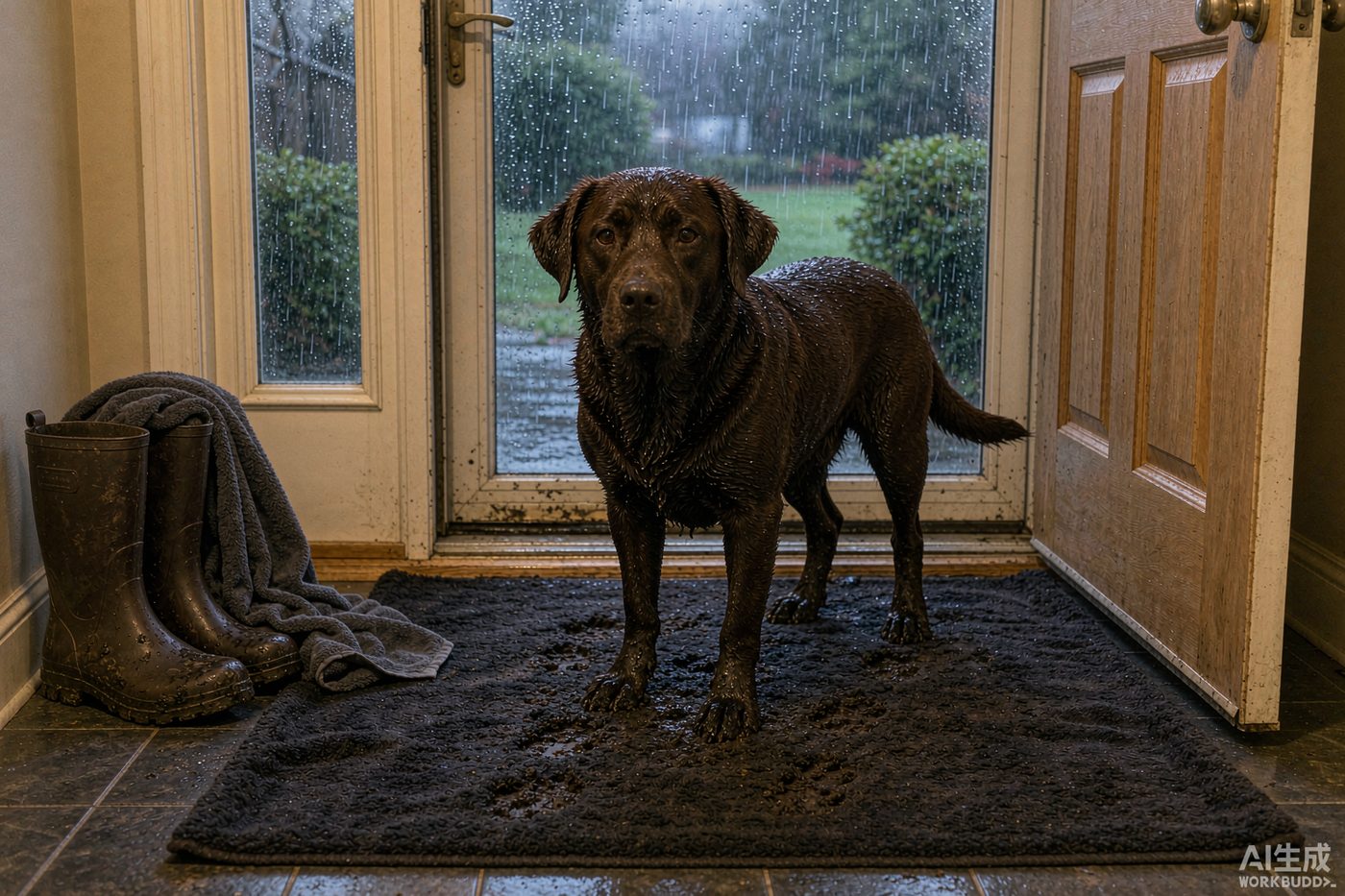
The scene: rain, a fence line that must be inspected, and a dog who treats every puddle as a personal spa. Between the back door and the sofa lies a gauntlet of hardwood that never asked for this. A well-planned rug-and-mat system at the door is the cheapest home improvement a dog owner can make.
The two-zone door system
Zone 1 — outside or in the doorway: the scraper. A coarse, rubber-backed mat (or rubber scraper mat) that takes the first layer: mud chunks, gravel, snow. This mat gets hosed off, not washed. It exists to die so that Zone 2 doesn’t have to.
Zone 2 — inside: the absorber. A machine-washable rug where the paw-wiping happens (see routine below). This is the piece worth choosing carefully, because it lives in your hallway and gets washed weekly in mud season.
Choosing the washable rug
The features that survive real paw traffic:
- Machine washable, actually. “Spot clean only” in a hallway is fiction. Look for explicit machine-wash claims and check dryer instructions.
- Low pile. Short fibers release mud in the wash, dry fast, and don’t catch claws. Shag feels great underfoot and is a mud Terrarium.
- Dark, patterned colors. Camouflage is a feature: a busy charcoal or earth-tone pattern hides the between-wash grime.
- Non-slip backing (TPR/rubber). A sliding rug in a paw-wiping zone is a hazard for dogs (and hips).
- Size for the whole scene. The dog needs 2–3 strides of rug, not a doormat square. Runners work beautifully for hallways; make sure the rug covers the zone from door to first turn.
- Wash frequency tolerance. The practical test from owner reviews: does the rug look fine after 20+ washes? Thin decorative rugs ball up; dedicated washable rug brands hold shape. Budget for a dedicated brand if the rug is load-bearing in your entry.
Machine-Washable Rug (low pile, non-slip)
Door runner, dark pattern, rubber/TPR backing, explicitly machine washable — sized for three dog strides.
The paw-wiping routine the rug enables
The rug alone doesn’t clean paws — the routine does, and it takes about fifteen seconds:
- Stop on the mat. “Wait at the door” is the highest-ROI behavior for a clean house; most dogs learn the boundary in a week of treats.
- Wipe each paw once with the towel that lives on the hook by the door (damp in mud season — see our winter paw care guide for the salt-season version).
- Release onto the rug, not the floor. The remaining damp dries on the rug’s low pile, not your hallway.
For genuinely filthy days, the upgrade path: a shallow tray of water at the door for a 10-second paw dip, towel, done. (Towel dedicated to this job only. Trust us.)
Beyond the entryway
- Crate and feeding zones: a second washable rug under bowls catches the water-splash and kibble scatter. Wash with the weekly load.
- Car: a washable trunk mat or hammock turns “the dog happened to the back seat” from a detail-shop expense into a laundry cycle.
- Sofa corner: washable throw blankets protect the #1 dog spot; they’re also where most of the shedding-season fur lands by design. See the shedding cleanup kit for removal tools.
FAQ
How often should I wash entry rugs in mud season?
Weekly for the inside absorber rug, more often if it smells or looks saturated. The outside scraper mat gets hosed whenever the mud is visible.
Are rubber-backed rugs really machine washable?
Yes, cold or warm gentle cycles, air dry or low tumble — heat is what kills the backing over time. High-heat drying is the #1 way washable rugs stop being washable.
My dog eats rug corners. Help.
Redirect to a chew outlet on the rug (see our [chew-proof bed strategy](/posts/dog-beds-for-chewers/) — same principle), and pick rugs without bound fringe or tassels to reduce temptation. Puppies: skip expensive rugs until the phase passes.
Scraper outside, absorber inside, towel on a hook, “wait” at the door. Mud season stops being an emergency and becomes a minor tax. You’re welcome from all of us with hardwood floors.