
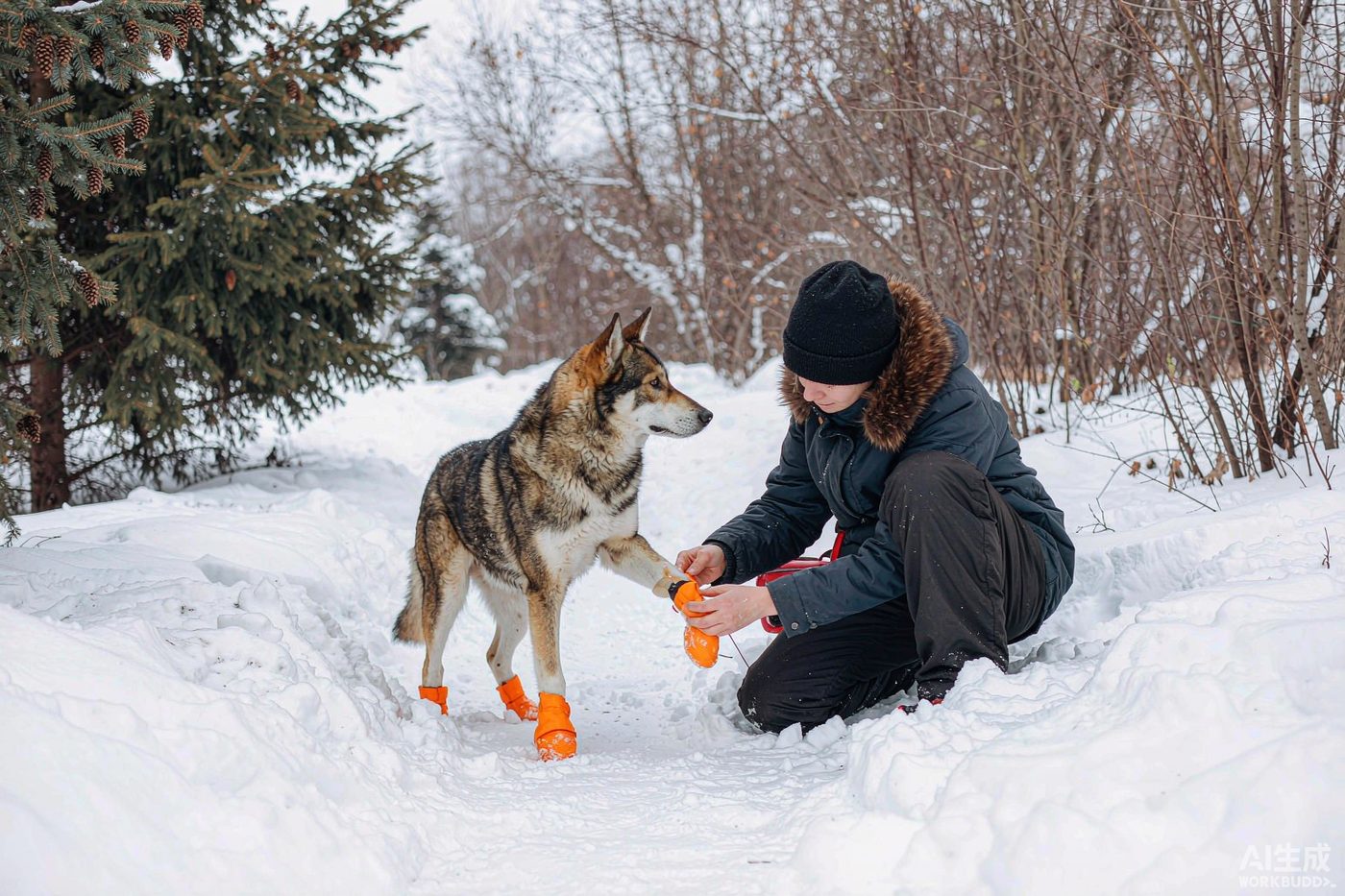
Winter is hard on paws in two ways, and they need different fixes. Cold and ice dry and crack pads; sidewalk de-icing salt is worse — it stings micro-cuts, dries pads further, and gets licked off indoors, which nobody wants. A $15 prevention kit beats an unhappy limping dog every time.
The three-layer defense
Layer 1: Paw balm (the default for most dogs). A wax-based balm works two ways — applied before the walk, it shields pads from salt and cold; applied after, it moisturizes cracked pads. Look for all-natural ingredient lists (beeswax, shea, plant oils) because whatever goes on the paw ends up, eventually, in the dog. Reapply after wiping. A single tin lasts a season.
Layer 2: Booties (for the worst conditions or injured paws). Dog booties work — sled dog teams use them for a reason — but fit is everything:
- Measure paw width while the dog stands (weight spreads the paw wider),
- Soles should be flexible rubber, not fabric,
- Ankle-length with a double closure (velcro + cinch) stays on; single straps spin,
- Expect the first-walk comedy walk — most dogs adjust within three or four outings,
- One spare in the coat pocket: you will lose one in a snowbank eventually.
Layer 3: The post-walk wipe. A damp towel or pet-safe wipes over each paw removes salt before it’s licked and before it dries pads on the rug. Thirty seconds, every single walk. Keep the towel by the door next to your mud-season rug setup.
The daily winter routine
- Check paws pre-walk for existing cracks (balm them if found).
- Thin layer of balm before heading out on salted routes.
- Walk (booties if temps are brutal or salt is heavy).
- Wipe all four paws with a damp towel on return.
- Light balm again if pads look dry; a visual check between toes for ice balls — especially in furry-pawed breeds, ice pellets form between the pads and hurt.
Trim for winter
Furry paws collect ice balls in the fur between pads. A brief trim of that fur flush with the pads (scissors, careful, or a groomer) dramatically reduces ice-ball formation. Don’t trim the pads themselves — the fur texture provides traction until it ices up.
Paw Balm (wax-based, all-natural)
Beeswax + shea based, lick-safe ingredients, applied before and after winter walks.
When it’s already gone wrong
- Cracked, bleeding pads: skip walks on salt for a few days, balm generously, and see the vet if cracks are deep — infection in a pad is a real risk.
- Salt burns between toes (red, raw, licking): rinse paws in lukewarm water, dry thoroughly, and switch routes to untreated sidewalks or grass.
- Limping after a cold walk: check between the pads first — it’s an ice ball or a cut more often than anything orthopedic.
Bootie-fit quick reference
| Sign | Meaning |
|---|---|
| Boot spins sideways | Too big or single strap — size down or better closure |
| Dog walking on the side of the boot | Too small — claws hit the front seam |
| Boot stays on through zoomies | Correct fit 🎉 |
| Two boots lost, one walk | Closure failure — double-closure designs only |
FAQ
Is sidewalk salt actually dangerous?
It irritates and dries pads, stings in existing cracks, and most formulations aren't meant to be ingested — licked paws mean swallowed salt. The wipe routine solves nearly all of it. Pet-safe de-icers exist for your own walkway; the city's salt you can't control.
Can I use my own lip balm / Vaseline?
Pet-formulated balms are made lick-safe with dog-appropriate ingredients. Vaseline is considered low-toxicity in small licked amounts but is a petroleum product; a beeswash balm is the better tool.
At what temperature do dogs need booties?
Condition-dependent: huskies laugh at −15°C; short-coated breeds get cold feet around freezing, sooner on salted ice. Watch for lifted paws — that's the dog voting.
Winter paws are a systems problem with a cheap solution: balm, wipes, and a trim, with booties as the heavy-weather upgrade. See also our deshedding brush guide for the other half of winter coat management.