
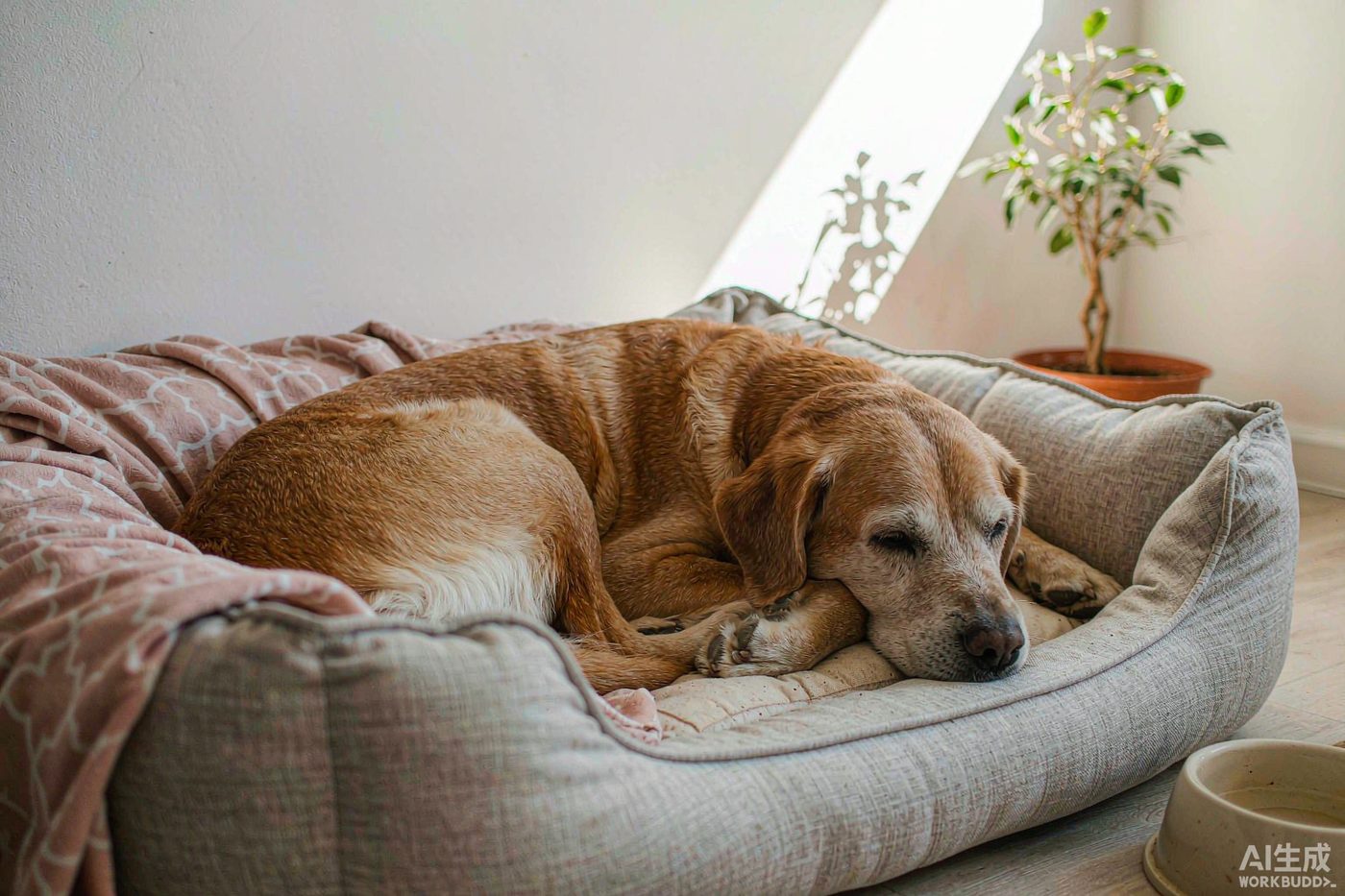
Senior dogs don’t need much — but the little they do need makes a visible difference. The grey-muzzled dog who hesitates at the stairs isn’t asking for much: a warmer bed, a floor that doesn’t slide, dinner that’s easier to reach. Here’s the short list of changes with the biggest comfort payoff, and the ones you can skip.
Start with the vet (seriously)
Slowing down is aging; stopping doing things is often arthritis, hypothyroidism, dental pain, or heart disease — much of it treatable. “He’s just old” has cost many dogs years of comfort. A senior wellness exam (generally recommended twice yearly after age 7–8, earlier for giant breeds) is the highest-value item on this list, and no product replaces it.
The comfort list, by impact
1. An orthopedic bed. The single best purchase. Real memory foam (check the foam density — “plush” is not support) distributes weight off elbows and hips, and the low-entry design matters as much as the foam: a 10 cm (4 in) edge is a climbing wall to a stiff dog. Look for:
- Genuine memory foam base, 10 cm+ thick for large dogs,
- Low, ramped edge or flat entry,
- Machine-washable cover (see our washable picks logic — senior dogs and washability are inseparable topics),
- Bolsters for dogs who lean, flat for dogs who sprawl.
2. Floor traction. Hard floors become ice rinks for weak hips. Runners and yoga mats along the main routes (door → bowl → bed → sofa ramp) do more for mobility confidence than any supplement. Grip mats under bowls help too. Cheap, immediate, visibly effective.
3. Raised bowls — with a caveat. Easier on necks, genuinely helpful for tall dogs and painful necks. (Discuss elevation with your vet for deep-chested, bloat-prone breeds — see our bowl materials guide.)
4. Ramps and steps. For the car and the sofa, before the jump becomes a fall — the training window is while the dog can still jump, because ramps feel silly until they feel impossible. Non-slip surface, gentle angle, side rails.
5. Adjusted enrichment. Seniors need brain work more than ever — scent games, snuffle mats, easy puzzles — with the difficulty dialed to success, not challenge. A senior solving a level-1 puzzle confidently is doing exactly the right work.
6. Grooming adjustments. Regular gentle brushing (see our deshedding guide) matters more now — seniors groom themselves less, and mats form quietly. Nail care too: long nails change gait and worsen joint strain, and grinders suit sensitive senior feet better than clippers.
What to skip
- Expensive supplements with big claims — joint supplements have mixed evidence and vary enormously; ask your vet which (if any) fit your dog rather than trusting ads.
- Heated beds without supervision and a low setting — warm spots are loved; burn risk with impaired sensation is real. Self-warming (reflective) beds are the zero-risk version.
- “Senior” labeled food on marketing alone — senior diets should match the dog’s condition, not the birthday. Vet guidance over bag copy.
Orthopedic Dog Bed (memory foam, low entry)
Real memory foam 10 cm+, ramped low edge, washable cover — the highest-impact senior purchase.
The daily rhythm that helps most
- Short, frequent walks beat one long weekend march. Same total distance, happier joints.
- Warm-up sniff time at the start — a slow sniffing first five minutes is a warm-up, not a delay.
- Consistency of layout. Senior dogs (especially with vision loss) thrive on furniture that stays put. Rearranging the living room is disorienting, not refreshing.
- Patience at doors and stairs — let them set the pace; help only when asked (a sling or towel under the belly for bad days).
FAQ
When is a dog a "senior"?
Size-dependent: giant breeds around 6–7, large breeds 7–8, small breeds closer to 10. Behavior and vet findings matter more than the birthday.
My senior dog pants a lot at night. Normal?
Sometimes it's age-related restlessness, sometimes pain, sometimes heart issues — increased nighttime panting is worth a vet conversation rather than a mattress purchase.
How do I keep a senior dog lean?
Lean body condition is one of the best-evidenced ways to extend healthy years. Measure meals, count treats, and run a monthly rib check — you should feel ribs easily under a thin fat layer.
A vet who knows the dog, a real memory-foam bed, traction on the highway routes, and easy wins for the brain. That’s senior care in four lines — and every item on the list is something you can start this week. 🐾